
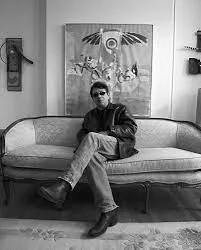
Victor Mirabelli’s modern landscape paintings reflect the undaunted beauty of the countryside and structures that surround him. His approach is undisciplined, free-spirited—an abandonment from the traditional—resulting in something “fresh and imaginative.”
Mirabelli attributes his style to his art education and execution of his early abstract oil paintings. Each work is the result of “chance-taking.” His fresh approach combined with a technique of layering many pigments and unique brush and scrubbing techniques, create a painterly quality that is his signature mark.
Mirabelli’s works reflect an impression, a mood—where detail is characterized by his use of contrasting light against dark. Using a muted palette to represent the purity and simplicity of the land, his artistic endeavors have often been described as “haunting and soul-baring…a very personal, solitary interpretation of the surrounding landscape.”
Born in Wenatchee, Washington, along the Columbia River, which runs through the Basalt canyons bordering the Colville Indian reservation, Victor was drawn to the dry, arid summer air blanketing the sagebrush hills where weather-beaten farmhouses stood abandoned along dusty dirt roads. These stark impressions were the inspiration behind his personal journey into the world of modern landscape painting.
He pursued his formal art education at the Burnley School of Professional Art in Seattle and later moved to New York City in the late 70s. Victor’s loft at 36 East 23rd Street, overlooking Madison Square Park, offered inspiration and space to discover and develop his style while immersing himself in New York’s art world.
One of the benefits of living in New York City was spending time in the nearby East End of Long Island’s North and South Forks, bordering the Long Island Sound, the Peconic Bay and the Atlantic Ocean. In addition to some of the most striking beaches in the world, the area celebrates lush landscapes featuring farmland and vineyards. The beauty of the countryside and waterside serves as a major inspiration in Victor’s drawings and paintings. To this day, he takes insight from the warm earth tones, classic Long Island farmhouses and rural country outposts and barns.